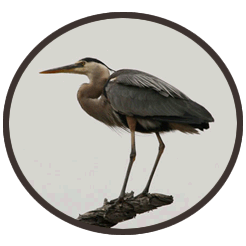
What Do Herons Look Like?
Herons have distinctive long legs, long necks, and dagger-like beaks perfectly suited for fishing! Their specialized body design makes them expert wading bird hunters.
Great Blue Heron - North America's Largest Heron:
- Stands 3.5-4.5 feet tall
- Wingspan reaches 6 feet!
- Blue-gray plumage with rusty thighs
- White head with black stripe over eyes
- Long black plumes on head
- Yellow dagger-like bill
- Slow, graceful flight with neck folded
- Most common and widespread North American heron
Great Egret - Elegant White Heron:
- Pure white plumage
- 3 feet tall with 4.5-foot wingspan
- Long black legs and yellow bill
- Breeding season: spectacular plumes (aigrettes) on back
- Hunted nearly to extinction for feathers (now protected!)
- Symbol of the National Audubon Society
Green Heron - Small But Mighty:
- Smallest common heron (16-18 inches tall)
- Dark green-blue back and cap
- Chestnut neck and face
- Short legs (for a heron)
- Hunts from perches, not while wading
- Uses tools - drops bait to attract fish!
Snowy Egret - Dainty White Beauty:
- Medium-sized (2 feet tall)
- Pure white with black legs
- Distinctive yellow feet ("golden slippers")
- Black bill
- Active hunter - runs and stirs water with feet
- Graceful breeding plumes
Black-Crowned Night-Heron - Nocturnal Hunter:
- Stocky build, shorter legs than day herons
- Black cap and back, gray wings, white underside
- Red eyes adapted for night vision
- Most active at dusk and night
- Distinctive "kwok" call
All herons share key adaptations! Long legs allow wading in deep water without getting body feathers wet. S-shaped necks fold when flying but strike forward explosively when hunting. Sharp, spear-like bills stab fish. Long toes spread weight, preventing sinking in mud. Most have powder down - special feathers that crumble into powder for cleaning fish slime off plumage!
Heron neck mechanics are incredible! Special vertebrae create a kinked S-shape. When striking, muscles release this "spring" - the neck straightens in a lightning-fast forward thrust! This mechanism generates tremendous speed and power for spearing fish!
Flight is distinctive! Herons fly with necks folded into S-curves (unlike cranes and storks that fly with necks extended). Slow, deep wingbeats create graceful, ancient-looking flight. Legs trail behind body. Herons often fly in loose groups!
Where Do Herons Live?
Herons live near water worldwide! They inhabit marshes, swamps, lake shores, rivers, ponds, and coastal areas. Different heron species adapt to varied aquatic habitats from fresh to salt water.
Great blue herons are highly adaptable! They live throughout North and Central America near any water source - freshwater lakes, rivers, marshes, coastal estuaries, and even backyard ponds! Great blues tolerate human presence and often hunt in city parks and suburbs. They're year-round residents in southern areas but migrate from northern regions in winter.
Egrets prefer coastal and wetland areas! Great egrets and snowy egrets live in southern US coastal marshes, inland wetlands, and throughout tropical and subtropical regions worldwide. These white herons wade in shallow estuaries, salt marshes, and freshwater wetlands hunting fish and crustaceans.
Green herons like wooded streams! Unlike other herons preferring open wetlands, green herons inhabit small streams, ponds, and lakes surrounded by trees and shrubs. They perch on branches overhanging water, watching for fish below. Green herons are solitary and secretive compared to colony-nesting herons.
Night-herons roost during day! Black-crowned night-herons sleep in dense vegetation during daylight, becoming active at dusk. They hunt at night when fish move to shallow water. Night-herons live near water worldwide - they're among the most widespread heron species!
Herons nest in colonies called rookeries! Hundreds or thousands of herons build stick nests in trees near water. Rookeries are noisy, smelly places filled with calling birds! Trees become white with droppings. Despite mess, rookeries provide safety in numbers - group vigilance protects against predators!
Rookery locations are traditional! Herons return to the same nesting sites for decades or centuries! Some rookeries have been used for over 100 years! However, human disturbance can cause entire colonies to abandon traditional sites permanently.
Some herons migrate! Northern great blue herons fly south for winter when lakes freeze. Others stay year-round if water remains open. Egrets from northern areas migrate to southern US and Central America. Migration patterns depend on food availability!
Tropical herons don't migrate! Species in stable climates stay year-round. Tropical regions host incredible heron diversity! Rainforest wetlands, mangrove swamps, and tropical rivers support numerous heron species unavailable in temperate zones.
Herons defend feeding territories! Individual birds claim stretches of shoreline and aggressively chase away other herons! Spacing prevents competition and ensures each bird has adequate fishing area. Territorial disputes involve displays, chases, and occasionally violent fights!
What Do Herons Eat?
Herons are carnivorous fish-eaters! They also hunt amphibians, crustaceans, insects, and small mammals. Their diet varies by habitat and available prey.
Great blue herons eat:
- Fish (main diet) - minnows, sunfish, perch, catfish, eels
- Frogs and salamanders
- Crayfish and crabs
- Aquatic insects and dragonflies
- Small mammals - mice, voles, muskrats
- Occasionally ducklings and small birds
- Snakes and turtles
- Swallow prey whole!
Egrets primarily eat:
- Small fish
- Shrimp and other crustaceans
- Aquatic insects
- Frogs and tadpoles
- Snails and worms
Heron hunting techniques are fascinating! The classic method: stand motionless in shallow water, waiting for prey. When fish approaches - STRIKE! The neck shoots forward, bill stabs fish, and heron swallows it whole! This patient ambush strategy is incredibly effective!
Different hunting styles exist:
- Stand-and-wait - Classic motionless waiting (great blues, great egrets)
- Active stalking - Walking slowly through shallows (tricolored herons)
- Foot-stirring - Running and kicking to flush prey (snowy egrets)
- Perch-hunting - Watching from branches (green herons)
- Wing-shading - Spreading wings to reduce glare (black herons)
Green herons use tools! They drop insects, twigs, or feathers onto water surface as bait! When fish investigate, herons strike! This tool use demonstrates remarkable intelligence - green herons are among few birds that use bait fishing!
Herons swallow prey whole! Small fish slide down easily. Large fish require manipulation - herons turn fish to swallow head-first (scales don't catch in throat). Watching herons swallow large fish is dramatic - you can see the fish moving down the neck!
Feeding time depends on species! Day herons hunt during daylight - early morning and evening are most productive. Night-herons hunt after dark when fish are less wary. Some herons adjust timing based on tides - feeding when falling tides concentrate fish in pools!
Competition exists at good fishing spots! Multiple herons at productive locations create hierarchies. Larger species (great blues) dominate smaller species. Aggressive interactions include threat displays, chases, and bill-jabbing fights. Subordinate herons wait their turn or move to less-optimal spots!
Herons eat surprising amounts! A great blue heron consumes 1-2 pounds of fish daily! During nesting season when feeding chicks, parents catch and deliver hundreds of fish! This makes herons important predators in aquatic ecosystems - they significantly impact fish populations!
Baby Herons
Baby herons are called chicks! They're raised in stick nests in large colonies where hundreds of herons nest together.
Herons build stick nests in trees! Males gather sticks while females arrange them into platforms 2-3 feet wide. Nests are lined with softer materials - grasses, leaves, and moss. Construction takes 3-14 days. Nests are reused and enlarged yearly - old nests can be massive!
Rookeries are noisy, crowded places! Trees hold dozens of nests. Birds arrive, depart, and call constantly! Droppings cover everything white. Despite chaos, colony nesting provides safety - many eyes watch for predators. Eagles and raccoons think twice before raiding rookeries!
Clutches contain 2-6 eggs! Most herons lay 3-5 pale blue or green eggs. Eggs are laid days apart. Both parents incubate 23-28 days. First egg laid hatches first, creating age differences among nestlings!
Chicks hatch helpless but developed! They're covered in sparse down, eyes open, and can lift heads. However, they're completely dependent on parents! Older chicks grow quickly while last-hatched chicks struggle - size differences create competition!
Siblicide sometimes occurs! When food is scarce, older, larger chicks push younger siblings from nests! This brutal behavior seems cruel but ensures at least some chicks survive when food can't support entire brood. Not all herons do this - it depends on species and conditions.
Both parents feed chicks! Adults regurgitate partially digested fish directly into chicks' mouths. Young chicks are fed small fish; older chicks get larger prey. Parents make dozens of daily fishing trips to satisfy hungry nestlings!
Chick development timeline:
- Week 1-2 - Helpless, downy, fed regurgitated fish
- Week 3-4 - Feathers emerging, standing in nest
- Week 5-7 - Fully feathered, practicing wing exercises
- Week 8-10 - First flights, leaving nest but returning to roost
- Week 12+ - Fully independent, learning to hunt
Young herons take short practice flights! They flutter around rookery, crash-landing frequently! Parents continue feeding fledglings for weeks. Young birds follow parents to fishing areas, watching and learning hunting techniques!
Learning to fish takes time! Juvenile herons spend months perfecting their strike. Success rates are low initially - most strikes miss! Young birds grow frustrated, sometimes giving up and begging from parents! Only persistent practice creates skilled hunters!
Predators threaten nests! Raccoons, crows, ravens, eagles, and owls eat eggs and chicks. Snakes climb trees to raid nests! Despite parental defense and colony protection, nest predation is significant! Maybe 50-70% of nests successfully fledge chicks.
Why Are Herons Special?
Herons are designed with remarkable fishing adaptations! Lightning-fast striking necks, spear-like bills, long legs for wading, and patient hunting behavior make them supreme aquatic predators. They're perfectly suited for their fish-eating lifestyle!
Herons are important ecosystem indicators! Their presence indicates healthy wetlands with abundant fish! Herons are top predators in aquatic food chains - they control fish populations and indicate water quality. Declining heron populations signal environmental problems!
Herons benefit wetland ecosystems! By eating fish, they prevent overpopulation and maintain balanced communities. Heron droppings fertilize rookery trees and surrounding water! Abandoned nests provide nesting materials for other birds. Herons are integral parts of wetland ecosystems!
Some heron species face threats! Habitat loss - especially wetland drainage - reduces nesting and feeding areas! Pollution affects fish populations herons depend on! Human disturbance causes rookery abandonment! Droughts can dry up the wetlands herons need! Conservation protects critical wetland habitats!
Everyone can help herons! Support wetland conservation. Don't disturb rookeries - give nesting herons space! Reduce pesticide use (protects fish and amphibians). Create backyard ponds (herons will visit!). Report injured herons to wildlife rehabilitators. Appreciate these magnificent birds from respectful distances!