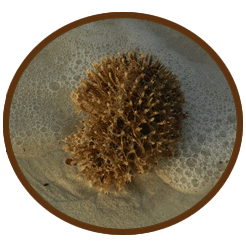
What Do Sponges Look Like?
Sponges come in amazing shapes, sizes, and colors! They don't look like typical animals - many people think they're plants!
Sponges have no symmetry! Unlike other animals with symmetrical bodies, sponges grow in irregular, asymmetric shapes. Their forms are suited to their environment - water flow, available space, and substrate determine final shapes!
Common sponge shapes:
- Vase or barrel sponges - Hollow tubes or barrels with large openings at top
- Encrusting sponges - Flat, growing across rocks like colorful crusts
- Branching sponges - Tree-like with multiple branches
- Tube sponges - Long cylinders standing upright
- Massive sponges - Large, boulder-like blobs
Sponge sizes vary dramatically! The smallest sponges are barely 0.4 inches (1 cm). The largest are giants! Giant barrel sponges in the Caribbean grow over 6 feet tall and 6 feet wide - large enough for a person to sit inside! Some sponges weigh over 100 pounds!
Sponges are incredibly colorful! Bright oranges, yellows, reds, purples, greens, and blues make coral reefs look like underwater gardens! Colors come from: algae living in sponge tissues, pigments sponges produce, or bacteria symbiotic with sponges! Some sponges are drab browns and grays for camouflage.
Sponge bodies are full of holes! The name "Porifera" means "pore bearer." Thousands of tiny pores (ostia) cover sponge surfaces. Water flows in through pores and out through larger openings (oscula). This constant water flow brings food and oxygen while removing waste!
Sponge skeletons provide structure! Most sponges have internal skeletons made of: tiny glass-like needles (spicules) made of silica, OR calcite spicules (calcium-based), OR flexible protein fibers called spongin. The bath sponges people used before synthetic sponges were skeletons of spongin sponges!
Spicules are beautiful! Under microscopes, sponge spicules look like tiny works of art! They're shaped like needles, stars, anchors, or snowflakes. Each species has characteristic spicule shapes - scientists identify sponges by their spicules!
Types of sponges:
- Glass sponges - Delicate, made of silica; look like spun glass
- Calcareous sponges - Calcium-based; usually small and drab
- Demosponges - Largest group (90% of species); includes bath sponges
Where Do Sponges Live?
Sponges live in all the world's oceans! From tropical reefs to polar seas, from shallow tide pools to deep trenches miles down, sponges thrive everywhere!
Most sponges are marine! Over 98% of sponge species live in salt water. They attach to hard surfaces - rocks, coral, shipwrecks, shells, or even other sponges! Once attached, sponges never move (adults are sessile). They spend their entire lives in one spot!
Tropical coral reefs are sponge paradises! Bright colors and diverse shapes make sponges prominent reef features. Tube sponges grow in forests! Barrel sponges reach enormous sizes. Encrusting sponges coat rocks in living carpets! Caribbean and Indo-Pacific reefs host thousands of sponge species!
Deep-sea sponges survive extreme conditions! Glass sponges live in deep, cold waters. Some form dense sponge gardens on seamounts and underwater ridges! Deep-sea sponges grow extremely slowly - some are thousands of years old! Antarctica's seafloor has spectacular giant sponges in near-freezing water!
Some sponges live in freshwater! About 200 species inhabit lakes, rivers, and streams. Freshwater sponges are usually small, green or brown, and encrusting. The green color comes from algae living inside them! Freshwater sponges form on submerged logs, rocks, and dock pilings.
Sponges need water flow! Constantly moving water brings food particles and oxygen while removing waste. Sponges orient themselves to catch optimal currents! Areas with strong water flow have dense sponge populations. Stagnant water can't support sponges!
Antarctic giant sponges are ancient! Some Antarctic sponges live over 1,500 years! The cold water and slow growth create incredibly old animals. A few may be 2,000+ years old - some were alive during Biblical times!
Boring sponges drill into shells and rocks! These sponges secrete acid that dissolves calcium carbonate! They bore networks of tunnels, living inside. Boring sponges weaken shells and contribute to reef erosion. They're important in nutrient recycling!
What Do Sponges Eat?
Sponges are filter feeders! They strain tiny food particles from water flowing through their bodies.
Sponges eat:
- Bacteria (main food source!)
- Phytoplankton (microscopic algae)
- Zooplankton (tiny animals)
- Organic particles floating in water
- Dissolved organic matter
- Some sponges host bacteria or algae that produce food
How sponges filter feed:
- Water enters through thousands of tiny pores (ostia)
- Inside, special cells called choanocytes (collar cells) have whip-like flagella
- Flagella beat continuously, creating water currents
- Choanocytes trap food particles in collar-like structures
- Food is digested by cells lining internal cavities
- Filtered water exits through large openings (oscula)
- Waste products are carried out with water
Sponges filter enormous amounts! One typical sponge pumps 20,000 times its own volume daily! A basketball-sized sponge filters 600 gallons of water per day! This makes sponges crucial water purifiers in ocean ecosystems!
Choanocytes are amazing! These specialized cells have sticky collars that trap particles as small as bacteria! Flagella beat 40 times per second, creating strong currents! The combined power of millions of choanocytes pulls water through the entire sponge!
Symbiotic partnerships help sponges! Many sponges host bacteria or algae (zooxanthellae) in their tissues. These partners photosynthesize or process chemicals, providing food to sponges! In return, sponges offer protection and nutrients. Partnerships help sponges survive in low-food environments!
Chemical defenses protect sponges! Since sponges can't move or run, they produce toxic chemicals that taste bad! These chemical defenses deter most predators. However, some animals eat sponges anyway - sea turtles, some fish, and nudibranchs (sea slugs) specialize in eating sponges!
Baby Sponges
Baby sponges develop in fascinating ways! Despite adult sponges never moving, their babies swim!
Most sponges are hermaphrodites! Individual sponges produce both eggs and sperm (at different times). This ensures reproduction even when sponges live far from others!
Sexual reproduction:
- Sponges release sperm into water
- Sperm are captured by other sponges' filtering systems
- Sperm fertilize eggs inside the sponge
- Fertilized eggs develop into larvae
- Tiny swimming larvae are released into water
- Larvae drift with currents for hours or days
- Larvae settle on suitable surfaces and transform into baby sponges
- Baby sponges never move again!
Sponge larvae can swim! Despite adults being immobile, larvae have flagella (whip-like structures) that propel them through water! This swimming phase spreads sponges to new locations. It's their only chance to move!
Larvae are very simple! They're hollow balls of cells with flagella. They have light-sensitive cells that help them avoid bright light (they prefer shady settlement spots). Larvae don't eat - they survive on stored energy for their brief swimming period!
Asexual reproduction (budding):
- Sponges produce outgrowths called buds
- Buds break off and settle nearby
- Each bud grows into a new sponge
- This creates clusters of genetically identical sponges
Gemmules (freshwater sponges):
- Freshwater sponges produce gemmules - survival capsules
- Gemmules are clusters of cells wrapped in protective coatings
- When conditions are bad (winter cold, drought), adult sponges die
- Gemmules survive frozen or dried!
- When conditions improve, gemmules sprout into new sponges!
- It's like suspended animation!
Settlement is critical! Larvae must find suitable surfaces before their energy runs out. Good spots have: hard substrate (not mud), good water flow, appropriate light levels, and few predators! Once settled, larvae undergo metamorphosis - their bodies reorganize into baby sponges!
Baby sponges grow slowly! Young sponges are tiny - barely visible. They grow gradually, filtering food from water. Growth rates vary by species and environment! Cold-water sponges grow millimeters per year. Tropical sponges grow faster but still take years to reach full size!
Why Are Sponges Special?
Sponges are designed with remarkable simplicity! Despite having no organs, they thrive in every ocean! Their filter-feeding abilities, incredible regeneration, and chemical production make them unique! Sponges represent some of the simplest successful animal body plans!
Sponges are crucial for ecosystems! They filter enormous amounts of water, clarifying oceans and reefs! Sponges recycle nutrients, provide habitat for other animals, and support food chains! Coral reefs wouldn't be healthy without sponges! Some ecosystems depend entirely on sponge filtering!
Sponges benefit humans! Medical research on sponge chemicals produces life-saving drugs! Bath sponges provided natural cleaning tools for thousands of years! Studying sponge materials inspires new technologies! Sponges support ocean health which benefits everyone!
Some sponges face threats! Overharvesting reduced bath sponge populations. Pollution harms sponges - they're sensitive to water quality! Changes in the water can affect sponge growth! Trawling destroys deep-sea sponge gardens. Some rare species need protection!
Everyone can help sponges! Support marine protected areas. Reduce ocean pollution (especially plastic and chemicals). Learn about sponges and share knowledge! Protect coral reefs where sponges thrive! Healthy oceans need sponges working as natural filters!