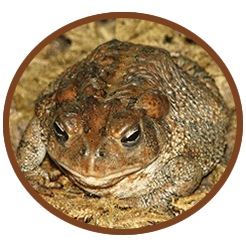
What Do Toads Look Like?
Toads have dry, bumpy skin covered in wart-like bumps! These bumps aren't real warts (you can't get warts from touching toads - that's a myth!). The bumps are actually glands that produce toxins to protect toads from predators.
Toads typically have shorter legs than frogs! Their back legs aren't as long and powerful. Instead of leaping like frogs, toads usually walk, crawl, or make short hops. This makes them look quite different in how they move!
Toads have special bumps behind their eyes! These large bumps are called parotoid glands. When a predator bites or squeezes a toad, these glands ooze poison! The poison tastes terrible and can make predators sick. It's an excellent defense!
Toad sizes vary greatly! The smallest is the Oak Toad at only 1 inch long - it can sit on a quarter! The largest is the Cane Toad, which can grow 9 inches long and weigh 5 pounds - as big as a dinner plate!
Most toads are brown or gray! Their dull colors help them blend into soil, bark, and leaves. This camouflage helps them hide from predators and sneak up on prey. Some toads can even slightly change color to match their surroundings!
Toads have horizontal pupils! Unlike many animals with round pupils, most toads have pupils shaped like horizontal slits. This gives them excellent vision for seeing movement and hunting insects at ground level!
Male toads have vocal sacs! These throat pouches inflate when males sing. Each toad species has a unique call. Some sound like long trills, others like musical chirps. Males call to attract females during breeding season!
Where Do Toads Live?
Toads live almost everywhere! They're found on every continent except Antarctica. Unlike frogs that usually stay near water, toads are more terrestrial - they prefer living on land!
Toads adapt to many habitats! They live in forests, grasslands, deserts, mountains, gardens, and even cities. Toads handle drier conditions better than frogs because their skin is less permeable, so they don't lose moisture as quickly.
Most toads only need water for breeding! Adult toads can live far from water. They get moisture from their food and by absorbing morning dew through their skin. When it's time to mate and lay eggs, they travel to ponds or streams.
Toads are nocturnal! They're most active at night when it's cooler and moister. During hot days, toads hide under logs, rocks, leaf piles, or in burrows. This behavior helps them avoid drying out.
Some toads dig burrows! Spadefoot toads have hard bumps on their hind feet shaped like spades. They use these to dig backward into soil, disappearing underground in minutes! They spend most of their time buried, waiting for rain.
Toads hibernate in winter! In cold climates, toads burrow underground below the frost line. They enter a dormant state called hibernation. Their breathing and heart rate slow way down. In spring, they emerge and immediately head to breeding ponds!
Many toads return to the same place each year! During breeding season, toads often travel to the same pond where they were born. Some travel over a mile! Roads built through migration routes can be dangerous - many toads are hit by cars.
What Do Toads Eat?
Toads are carnivores - they only eat meat! Like frogs, toads are predators that hunt live prey. They have excellent night vision for hunting in darkness.
What's on a toad's menu?
- Insects (beetles, ants, flies, moths)
- Spiders and mites
- Worms and slugs
- Snails (small toads eat baby snails)
- Small mice (large toads)
- Other amphibians (large toads)
Toads catch prey with their sticky tongues! When an insect comes close, the toad's tongue shoots out lightning-fast. The sticky tip catches the prey and pulls it into the toad's mouth. The whole action takes less than a second!
Toads swallow prey whole! They don't chew. Once food is in their mouth, toads blink their eyes, pushing them down into their head. This helps squeeze food down their throat! It's the same trick frogs use.
Toads are excellent pest controllers! A single toad can eat thousands of insects per summer. They especially love eating garden pests like slugs, snails, beetles, and cutworms. Gardeners love having toads around!
Large toads eat surprising prey! Cane Toads can eat mice, small snakes, and even other toads! They'll eat almost anything they can fit in their mouths. This makes them problematic invasive species in some areas.
Toads hunt by sight and movement! They have excellent vision for detecting motion. A toad will sit still, watching for movement. When prey moves, the toad strikes! They largely ignore non-moving objects.
Toads can go long periods without eating! If food is scarce, toads can survive weeks without eating. During hibernation, they don't eat for months! Their slow metabolism helps them survive lean times.
Baby Toads
Baby toads are called tadpoles, just like baby frogs! Toads go through the same incredible metamorphosis as frogs - from eggs to tadpoles to adults.
Toads lay eggs in water! Female toads lay long strings of eggs, unlike frogs that usually lay clusters. A single female can lay 4,000-20,000 eggs! The eggs look like long chains of jelly beads.
Toad eggs hatch into tadpoles! Toad tadpoles have round bodies and long tails. They breathe with gills and live completely in water. Toad tadpoles are often darker in color than frog tadpoles.
Tadpoles transform into toadlets! Like frogs, toad tadpoles grow back legs first, then front legs. Their tail shrinks, gills disappear, lungs develop, and their mouth changes shape. This transformation takes 2-12 weeks depending on species and temperature.
Tiny toadlets leave the water! When transformation completes, thousands of tiny toadlets (only thumbnail-sized!) hop out of the pond all at once. This mass emergence can look like the ground is moving! Each finds a place to live and start eating insects.
Young toads grow slowly! It takes 2-3 years for most toads to reach full adult size and be ready to breed. During this time, they eat tons of insects and grow bigger.
Many tadpoles don't survive! Birds, fish, insects, and other predators eat toad tadpoles. Even toad skin toxins don't fully develop until toads are older. Only a small percentage of tadpoles survive to become adult toads.
Some toads develop without water! A few species, like the Puerto Rican Crested Toad, lay eggs that develop directly into tiny toads, skipping the tadpole stage entirely! This is rare but allows them to breed away from water.
Toads vs Frogs - What's the Difference?
Many people wonder how toads and frogs are different! Here are the main differences:
Skin:
- Toads: Dry, bumpy, warty-looking skin
- Frogs: Smooth, moist, slimy skin
Legs:
- Toads: Shorter legs, walk or hop short distances
- Frogs: Long, powerful legs for leaping far
Habitat:
- Toads: Prefer land, only need water for breeding
- Frogs: Usually stay near or in water
Eggs:
- Toads: Laid in long strings or chains
- Frogs: Laid in clusters or clumps
Defense:
- Toads: Poison glands behind eyes, puff up when threatened
- Frogs: Jump away quickly, some have poison skin
Activity:
- Toads: Mostly nocturnal (active at night)
- Frogs: Can be active day or night
Important note: The differences aren't absolute! Some "toads" are more like frogs, and some "frogs" are more like toads. Scientists classify them by more than just appearance!
Why Are Toads Special?
Toads are designed with remarkable adaptations! Their poison glands, ability to survive in dry areas, and excellent pest control skills make them valuable members of ecosystems. They're more adapted to land life than most amphibians!
Toads provide free pest control! By eating thousands of insects, toads help gardeners and farmers. They control mosquitoes, reducing disease spread. They eat agricultural pests, protecting crops. Having toads around benefits humans!
Toads are environmental indicators! Like frogs, toads are sensitive to pollution and habitat changes. Declining toad populations often signal environmental problems. Protecting toads means protecting healthy ecosystems!
Many toad species face threats! Habitat loss, pollution, introduced predators, and diseases threaten toads worldwide. Some species are critically endangered. The Golden Toad of Costa Rica went extinct in 1989 - we'll never see this beautiful orange toad again.
Conservation helps toads survive! Protected habitats, reduced pesticide use, and wildlife crossings (tunnels under roads) help toads. Creating toad-friendly gardens with hiding spots and water sources also helps. Everyone can help toads thrive!